The work
How commercial drywall & painting actually goes on a JL job.
Commercial finish work is a different operating environment from residential, and the crews that do both well treat them as different projects from day one. Commercial drywall and paint runs on documented scope, fire-rated assembly requirements, after-hours scheduling around active tenants, and dust containment for occupied adjacent spaces. JL Drywall and Painting operates in both contexts with the same trade discipline, but adjusts the project management and equipment selection to fit the scale. Production rates on a 5,000 sq ft tenant improvement run measurably faster than the same square footage in residential — both because the spec is typically simpler (Level 4 finish across the field, fewer texture call-outs, larger continuous wall runs) and because the equipment scales up to mechanical drywall tools and high-output spray rigs.
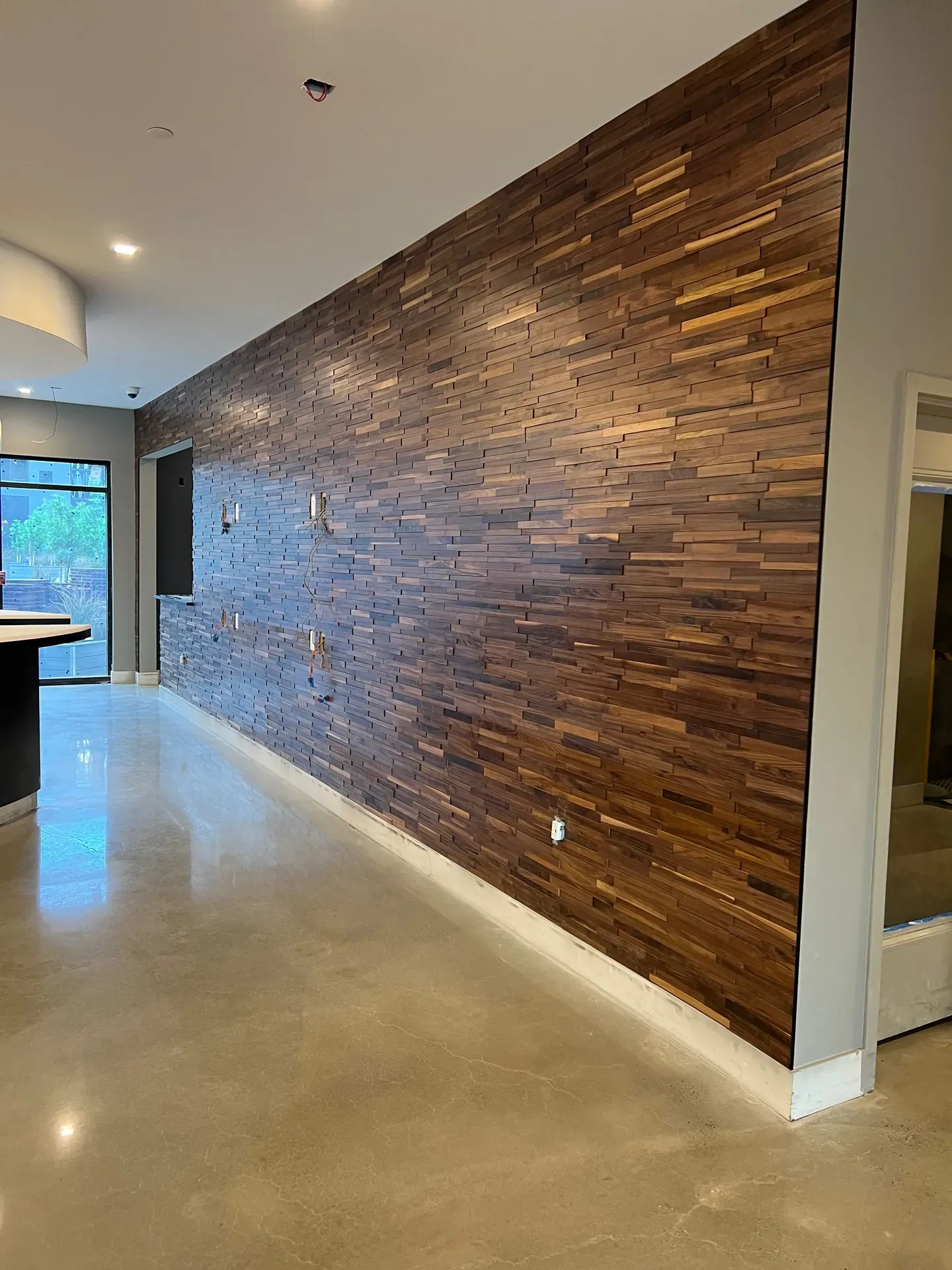
Typical commercial scope falls into four categories. Tenant improvement (TI) buildouts for office, professional services, and small retail spaces — drywall on metal stud framing, taping and finishing to a Level 4 commercial standard, ceiling tile work where the spec calls for suspended ACT systems, and prime + finish paint in the colors specified by the brand or interior designer. Retail finishes, where the front-of-house space typically requires a higher Level 4-plus or Level 5 finish under accent lighting and the back-of-house can take a working Level 4. Multi-family corridor and common-area work, which involves Type X fire-rated drywall on the demising assemblies, consistent paint finish across long continuous corridors, and stair-tower paint that meets the building's fire code. Industrial safety paint — the yellow stair-tread visibility paint, OSHA-required hazard striping at equipment safety zones, and durable epoxy floor coatings on commercial concrete slabs.
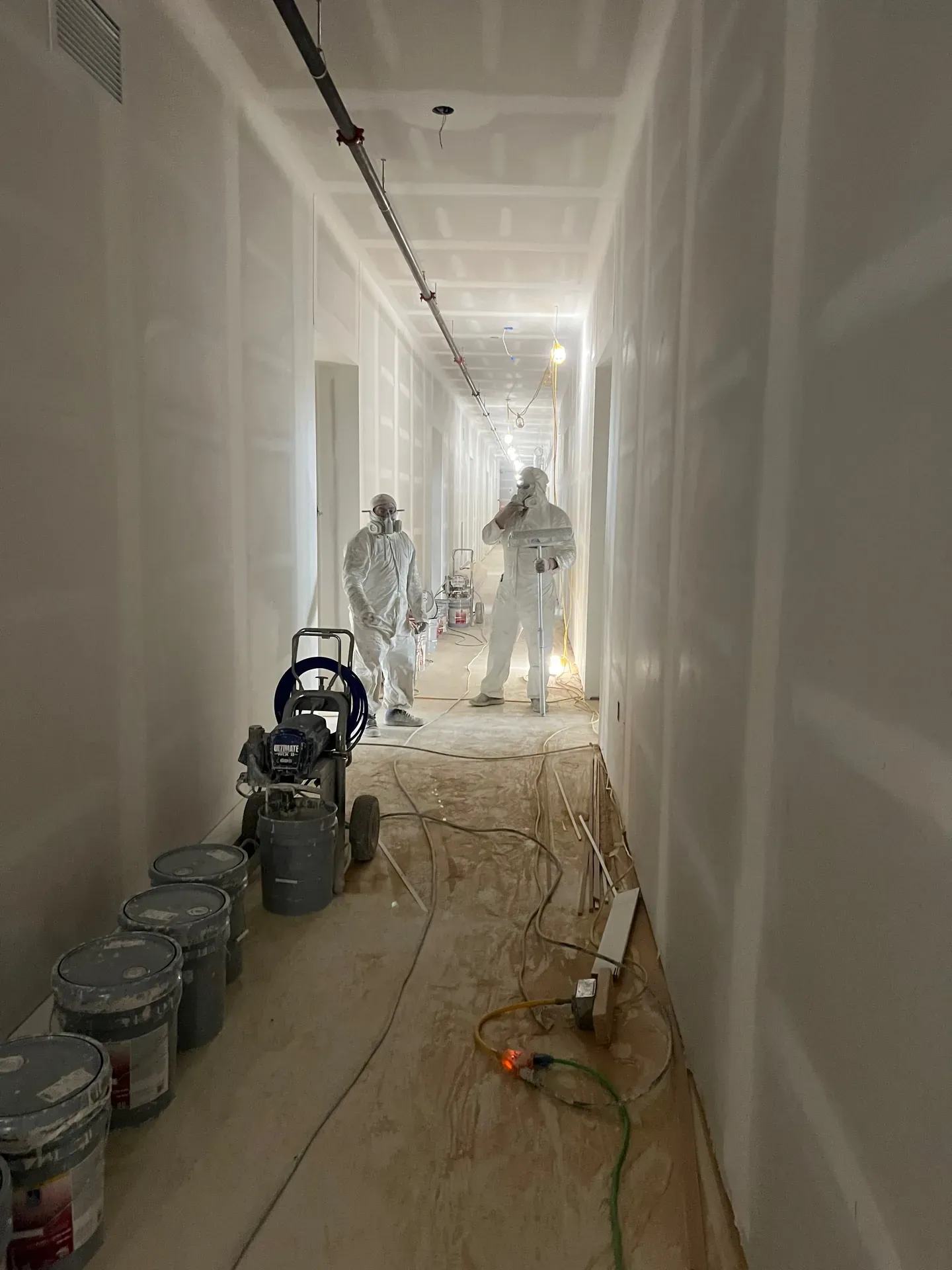
Process discipline at commercial scale uses the same protocols as residential, scaled to production tools. Spray application with HVLP or airless rigs for production-rate paint coverage; mechanical drywall tools (banjo tape applicators, automatic taper-finishers, mechanical sanders) for large continuous wall runs; HEPA-filtered dust extraction whenever sanding occurs in an occupied or adjacent-occupied building. The crew works in Tyvek suits and respirators for any spray work, both for OSHA compliance and to maintain the surface finish quality (an unsuited crew tracks micro-debris from clothing onto the finish work, which on a commercial spec means visible fisheyes or grit in the final coat). Day-night shift scheduling is available when the GC or building owner requires after-hours work to avoid disrupting an active business — most retail TI work is done in 11 PM–6 AM shifts to be out before the store opens.
Code compliance on commercial work is more involved than residential. The PA Uniform Construction Code adopts the IBC for commercial occupancies, which adds fire-rated assembly classifications (1-hour, 2-hour, and 4-hour assemblies, each with specific board, tape, and penetration treatment requirements), corridor and stairwell smoke-barrier ratings, and joint-treatment specs that residential drywall does not encounter. JL coordinates with the project's GC or construction manager on the architect's spec sheet, confirms that the products being installed match the approved drawings (Type X 5/8 board, fire-rated joint tape, intumescent caulks at all penetrations), and documents the work for the building inspector's package. When intumescent or fire-rated coatings are specified by the architect for steel-stud framing or structural members, those are applied per the manufacturer's coverage rates and inspection requirements — JL applies what the drawings call for, not what is convenient.
JL Drywall and Painting takes commercial work across Montgomery County and the broader Philadelphia metropolitan area. Project history includes retail tenant improvements, office TI work, industrial mezzanine and stair coatings, multi-family corridor and common-area finishes, and large basement build-outs in mixed-use buildings. Project size ranges from a single 1,500–2,000 sq ft retail storefront finish up through multi-floor office buildouts and multi-unit residential corridor packages. For commercial inquiries, Jose meets with the project manager, GC, or building owner during the estimate to confirm scope, schedule constraints, code requirements, and the spec sheet — commercial work always runs on a documented written scope, not a handshake proposal.